Takashi "Tak" Moriuchi grew up in a Japanese farming community called Yamato near Livingston, California. He attended the University of California at Berkeley and graduated with a degree in business management in 1941. When World War II began, he and his parents were incarcerated first in Merced Assembly Center and then in Amache, Colorado.
(Note - "Imprisoned Without Trial" presents the article and photographs which Sumi Kobayashi prepared for the October, 2008 celebration of Tak's life.)
When evacuees were encouraged to leave camp and seek jobs on the outside, Tak first looked around for opportunities in Colorado, then the midwest and eventually on the east coast, going as far as North Carolina. He knew he wanted to continue in farming.
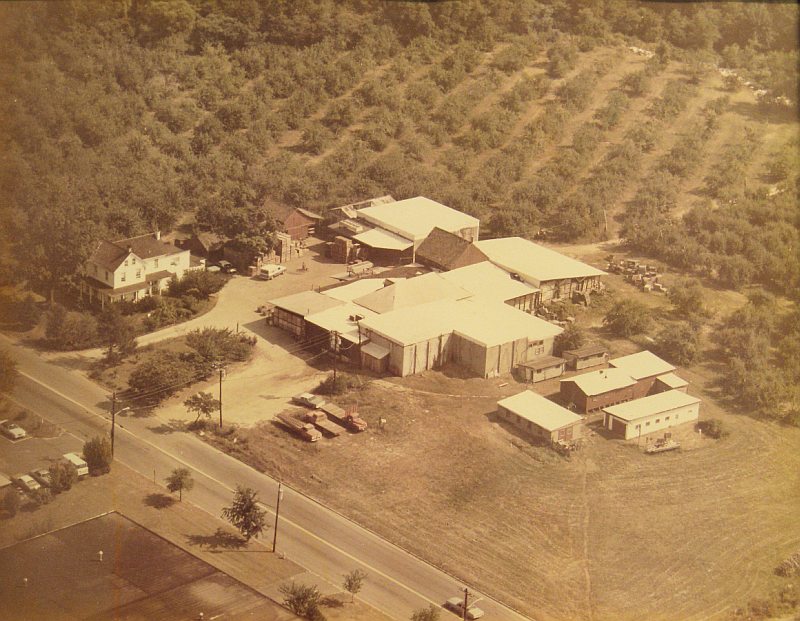
Tak liked the welcoming attitude of the Quakers in the Philadelphia area and decided to settle in nearby New Jersey. He worked for two years for a Quaker farmer, Lewis W. Barton. With an $8,000 loan from a local bank, he bought a small farm of about 100 acres. Tak first grew vegetables, including tomatoes for a Campbell Soup cannery, and strawberries for local supermarkets; eventually he bought more land to grow peaches and apples. About 1960 Tak became a partner in a tractor dealership, Cherry Valley Tractor Co. in Marlton. Later he helped found Moorestown National Bank, bought real estate and became a wealthy man. He owes his business success to being willing to take risks, but also to careful management.
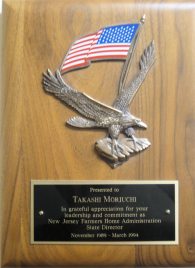
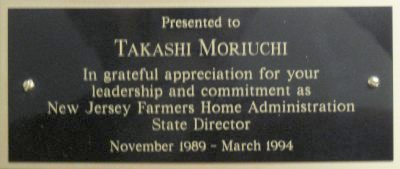
Tak has been honored for his many contributions to agriculture in New Jersey. During the George H.W. Bush administration he was appointed Director of the Farmers Home Administration for the State of New Jersey in the U.S. Department of Agriculture. In that position he was able to improve working conditions for low income agricultural workers in the state. He was awarded a Certificate of Appreciation in 1992 when his appointment was terminated at the end of the Bush administration. At the couple’s 60th wedding anniversary October 19, 2006, State Senator Diane Allen brought a message from the State of New Jersey honoring Tak Moriuchi for his contribution to agriculture in South Jersey. A crate of Tak’s logo is in the New Jersey State Museum in Trenton, attesting to the importance the state attaches to his part in the development of agriculture in the state.
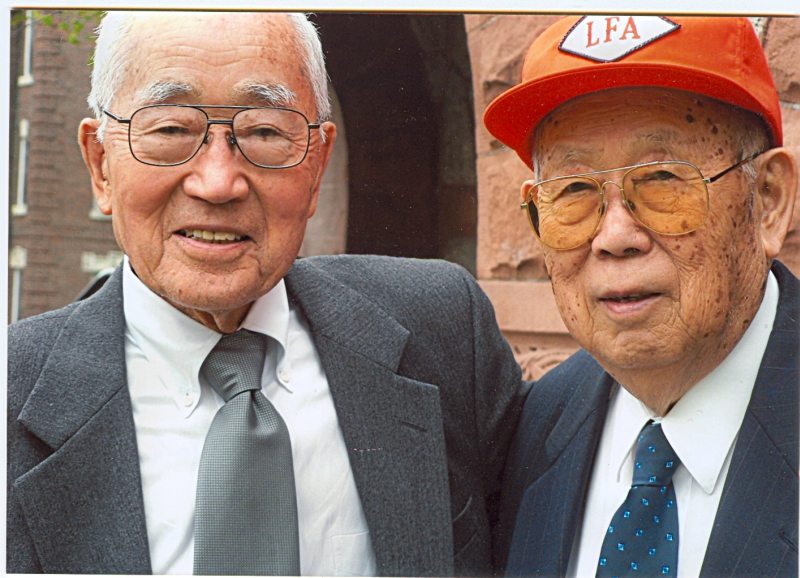
In attendance at the 60th anniversary celebration were Mary Hodges, a longtime employee of his farming ventures, and Lafayette Noda, his boyhood friend from Livingston, California, currently a resident of New Hampshire, This Thanksgiving story from the November, 2008 issue of Medford Leas Life tells of their enduring friendship.
About the time he turned over his farms to his children, he became deeply involved in building a Quaker sponsored retirement community in Medford, New Jersey. Lewis Barton, old friend Tom DeCou, and Tak were the principals involved in building Medford Leas. Tak contributed his financial expertise and connections with banks. He went as far as the west coast to investigate successful retirement communities. Currently Medford Leas is home to almost 800 residents on two campuses supported by a staff of approximately 350. Tak and his wife Yuri live there along with 18 other Japanese Americans. Article about Japanest Americans at Medford Leas from the October, 2008 issue of Medford leas Life.
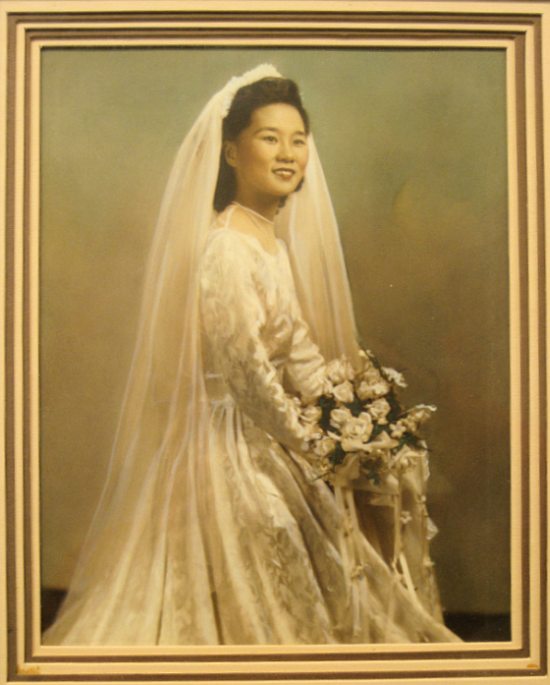
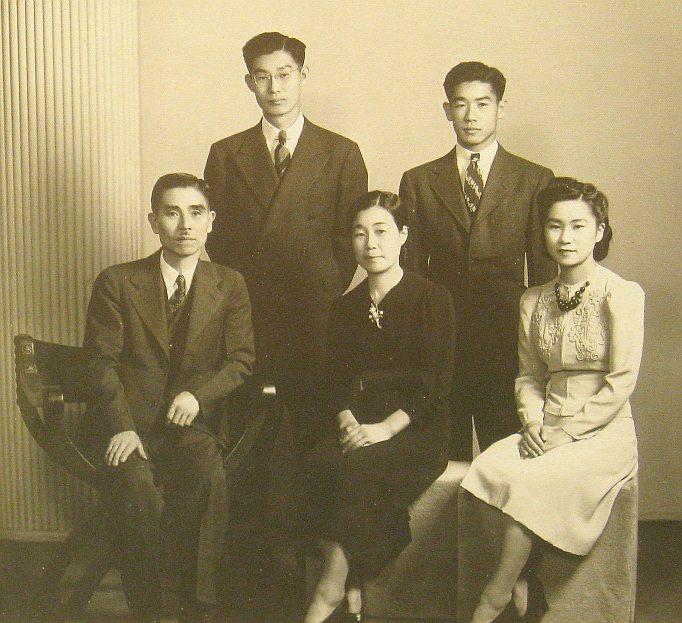 Left: The Uyehara family,. brothers Hiroshi and Isamu, parents Naotaka and Kiku, and Yuriko. Right: Yuri on 10/19/1946 |
 click photos for larger versions |
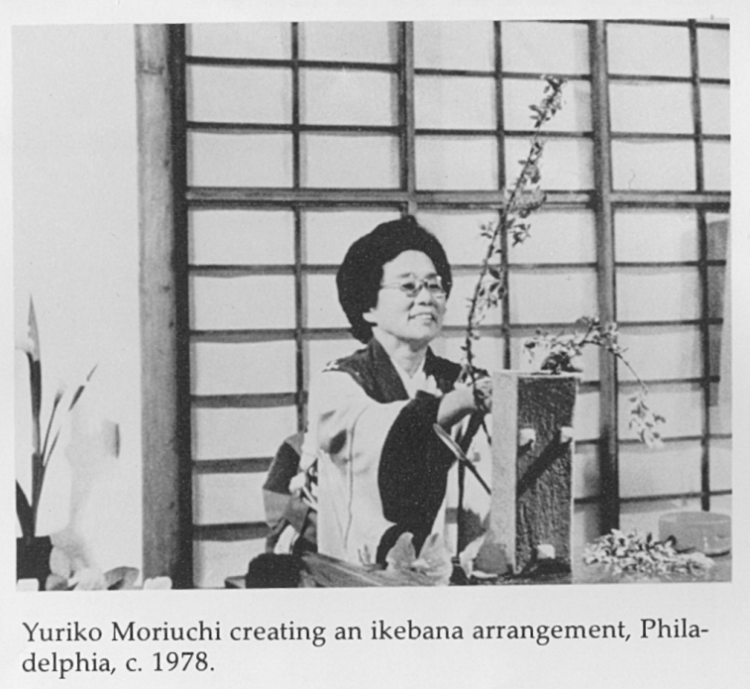 1978 -- Yuri teaching Ikebana |
 At Long Beach Island - 2005 click photos for larger versions |
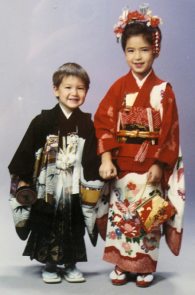
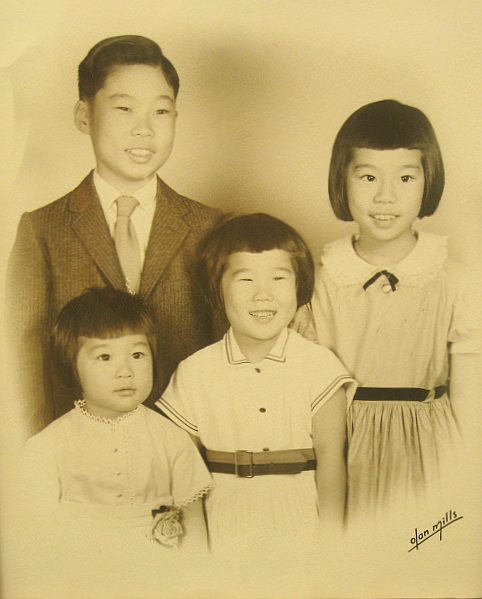 1958 - Fred, Miyo, Kiyo, Chiyo Right: Aaron & Sarah Haber, children of Chiyo & Mark Haber. chiyoNow |
 click photos for larger versions |
 1992 Family Photo - click to enlarge 
Family at Long Beach Island - click to enlarge. |
|


.............Click
either photo to see large version.
Tak with his
parents Tsukumo & Heijiro Moriuchi in Livingston, CA
Right: Tak's Portrait which hangs in the Medford Leas Gallery.

.............Click either photo to see large version
Left: Original Fellowship Rd. Farm..... Right: Hartford Road Farm
.
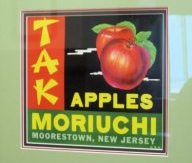 Above: Moriuchi Box Label, like the one in the NJ State Museum. Right: Plaque recognizing Tak's service in the NJ Farmers Home Administration. |
 |

.............Click
either photo to see large version
Left: 2006 photo with
his lifelong friend, Lafayette Yoda ..
Right: 1990 photo with the NJ Secretary of Agriculture.
Yuriko "Yuri" Uyehara was born in 1918 in Oakland, California, but grew up in Los Angeles; they moved in the mid-1930s to Boyle Heights. Her father had a shoe repair shop. When her brother Hiroshi left to attend UCLA, Yuri learned to drive and drove her father to visit his customers on Terminal Island, where many Japanese fishing families lived. The men on Terminal Island were highly suspect and were among the first to be picked up by government authorities because their livelihood required them to have intimate knowledge of the waters of the harbor area.
Yuri attended Los Angeles City College where she took accounting courses and first became interested in Ikebana, the Japanese art of flower arranging. Shortly before war with Japan began, Yuri was interviewed by the FBI. She thought they were testing her loyalty. She told them, “I was born in the United States….I have never been to Japan. This is my home.” When war came, the Uyehara family was sent to Santa Anita Assembly Center (formerly a race track) at Arcadia, California, where they were assigned to a white-washed horse stall. It still smelled of horses. "Old Mr. Konda" a famous photo by Dorothea Lange, which shows a stable converted into living quarters at Tanforan Assembly Center..
In October 1942 the Uyehara family boarded a train to be taken to the Rohwer Relocation Center in Arkansas. Yuri’s younger brother Isamu (Sam) was attending the University of California at Berkeley and was evacuated with an uncle to Topaz, Utah. Coming from the Los Angeles area, the Uyeharas found the high humidity and cold in the Mississippi bottomlands hard to take. Some of the men went into the swamp to collect cypress knees, which internees fashioned into decorative items like vases. When her brother Hiroshi left for Philadelphia, Yuri joined him there. By that time he had found employment with Westinghouse Corporation as an electrical engineer. Yuri found work as a bookkeeper with the Social Service Exchange, a clearinghouse for several non-profit institutions. A pioneer group of Nisei gathered for social events at the International Institute on 15th Street in Philadelphia. At one of the events Yuri met Takashi Moriuchi. At first she was not very impressed. He was a farmer and that was the last type of person she would like to be serious with. She was a city girl with no family background in farming. As she grew to know him better, she liked his honesty and mischievous streak and his drive. They were married October 19, 1946.
The next few years were focused on rearing four children, a boy and three girls. In the beginning money was tight and Yuri was busy with wifely and motherly duties. As Tak’s fortunes increased and the children grew, Yuri rekindled her early interest in the art of ikebana. She pursued her interest in the Ikenobo school, a branch that follows strict traditional rules, as opposed to other schools such as Sogetsu, which permits the practitioner freer expression. She participated in the Philadelphia Flower Show for many years, has served as a judge at various exhibitions, and is a past president of the Moorestown Garden Club. She has gone to Japan at intervals to maintain her credentials as a teacher. Today she still gives private lessons in her home and is periodically featured in local news media as a master of the art of ikebana.
Tak and Yuri joined the Society of Friends soon after their marriage and became dedicated supporters of Moorestown Friends Meeting and Moorestown Friends School. Tak and Yuri have been generous contributors to Japanese American and Asian American organizations. They have set up a family foundation through which they provide financial assistance to young people to further their education.
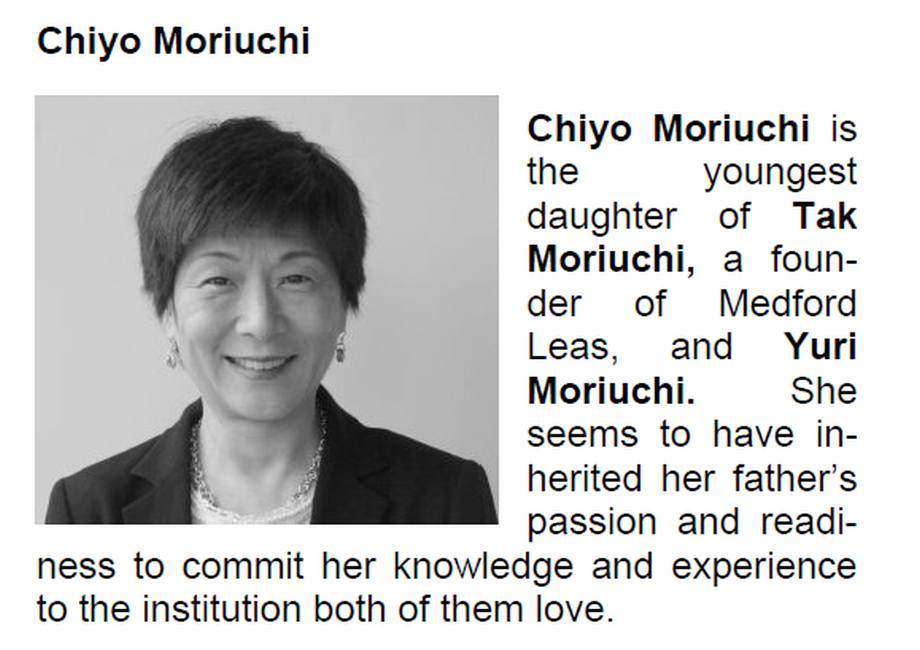
Tak and Yuri have four children: Fred Tamotsu, Agnes Miyo, Carol Kiyo and Nancy Chiyo; eleven grandchildren and one great grandson. Their children have published a book, “The Fruitful Life, Takashi & Yuriko Moriuchi,” honoring their parents on the occasion of their 60th wedding anniversary on October 19, 2006; published under the Legacy Memoirs imprint—a trademark of Breakthrough Seminars, Inc.—by EZway Books, LLC at 1736 E. Charleston, Las Vegas, NV 89104. Copyright Takashi and Yuriko Moriuchi, 2006. The Moriuchi book has been used as a resource by the author.