Text based on an article by Maggie Woodard -- photos of the display by Mike Carrell -- photo of Alex Webb by Margery Rubin
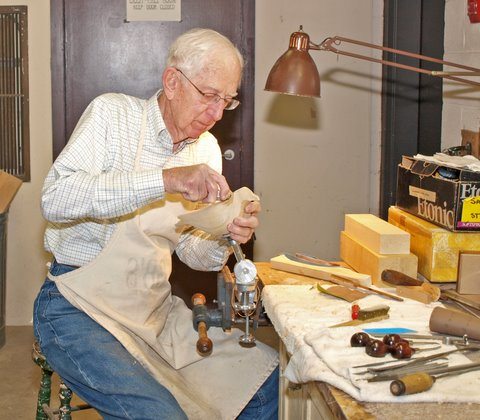 |
Alex Webb started making decoys and decorative birds in 1982 after he retired. He was not a novice woodworker; he had made furniture and model boats in past years, carving with old scalpels his father had used as a veterinarian. The creation of a waterfowl "decoy" began in the United States in the 18th century. Methods changed over the years along with competition for better decoys. But always the decoys were made to attract waterfowl for hunters. A new trend in waterfowl carving and painting, began to gain favor in mid 20th Century. Called "Decorative Birds", where the artist strives for absolute realism both in the bird and the setting. these "decoys" are not for use in hunting, but as decorative works of art. |
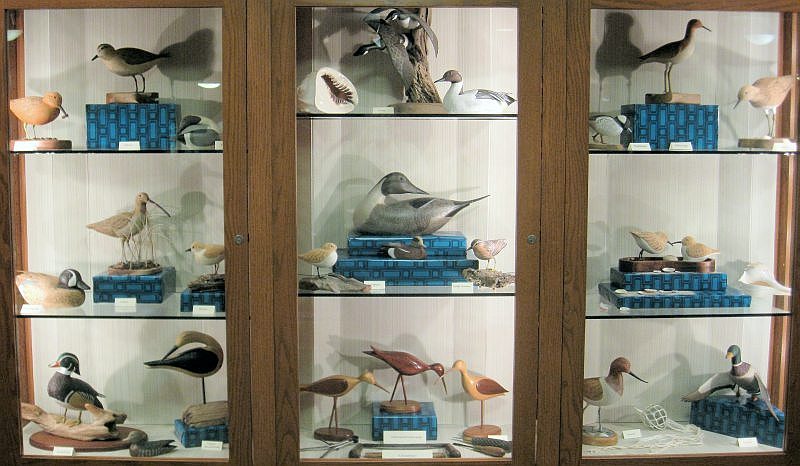
First the entire case, then closeups and descriptions of each of the nine sections
Links from the names of birds go to the "All About Birds" website of the Cornell Lab of Ornithology. At that site each bird has a separate page which tells about identification and life history and also gives the bird's call and in some cases a video of the bird.
Top
Row
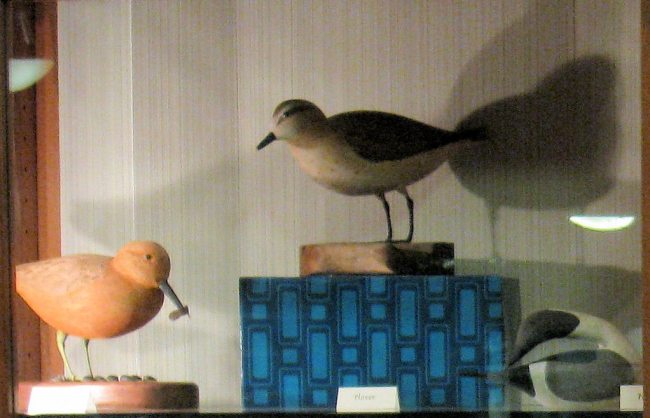
Left Column
Unless labeled as decoys, the birds in this display are all decorative birds.
The name of a bird in red, underlined, indicates a link to that bird's page on the website of the Cornell Ornithology Lab.
Middle
Row
Left Column
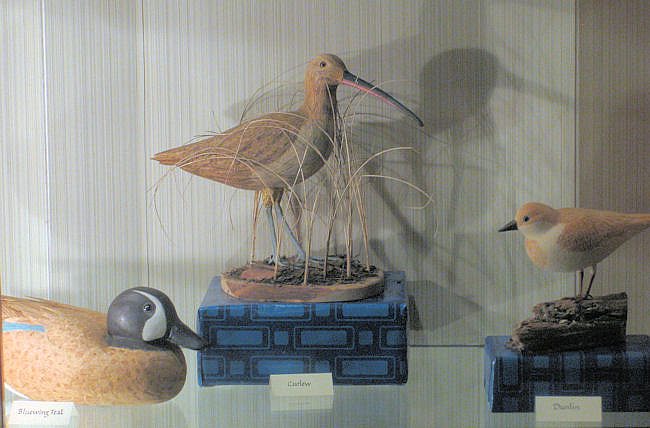
The Bluewing Teal in this section illustrates the use of both a burning tool and of paint.
The burning tool is fountain pen size. It is attached to a transformer that controls the degree of heat. The hotter the tool, the darker the mark it creates.
...Blue Winged Teal .................Curlew..............................Dunlin
Bottom
Row
Left
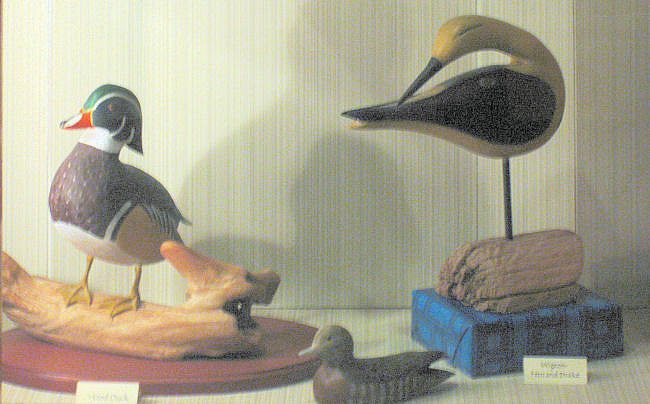
The shore bird decoy has a stick which is thrust into the sand. Dozens of these decoys would be placed on a beach to attract other birds.
The feet on the decorative Wood Duck were purchased.
This link goes to page where cast metal feet for a variety of birds are on sale.
Top
Row
Center Column
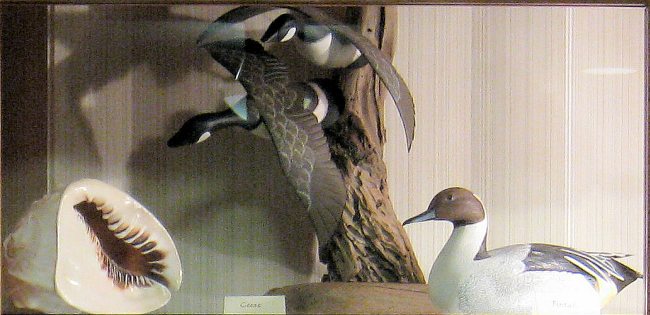
The mini Canada Geese, mounted on a column of driftwood, appear to be in flight
...............................Canada Geese (mini).................... Pintail
Middle
Row
Center Column
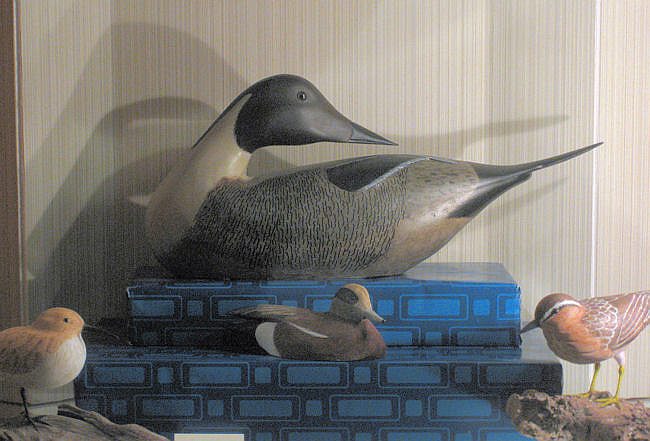
Alex's Preening Pintail decoy is a copy of one carved by Elmer Crowell which sold for over $1 million in 2007.
..Sandpiper........Pintail Decoy.... Male Wigeon (mini)....Ruddy Turnstone
Bottom
Row
Center Column
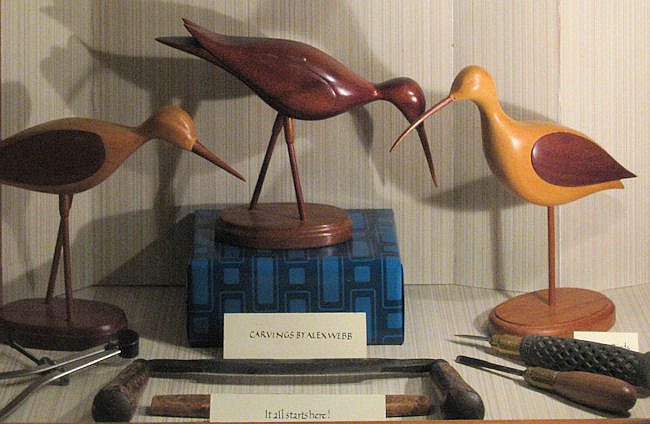
Alex uses the term
"Hobby Craft" to describe these shorebird carvings, which are
shown along with some of the tools which he uses.
.................. . "Hobby Craft" Shorebirds and Carving Tools
Top
Row
Right Column
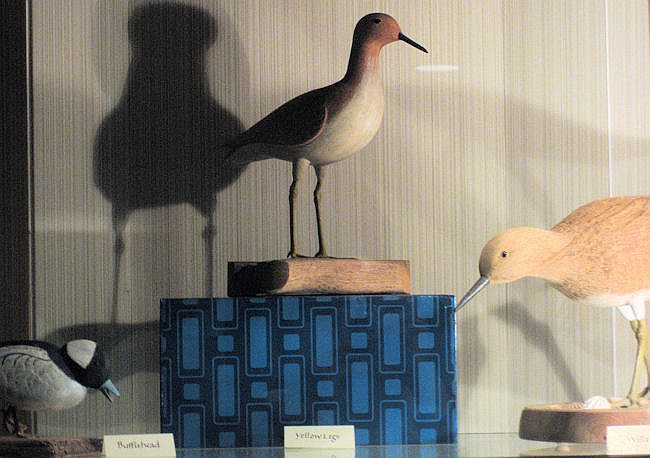
A bird's
page on the website of the Cornell Ornithology Lab provides a description
for identification, the life history, and a recording of the bird's call.
..Bufflehead (mini) ..............Yellow Legs .............................Willet
Middle
Row
Right Column
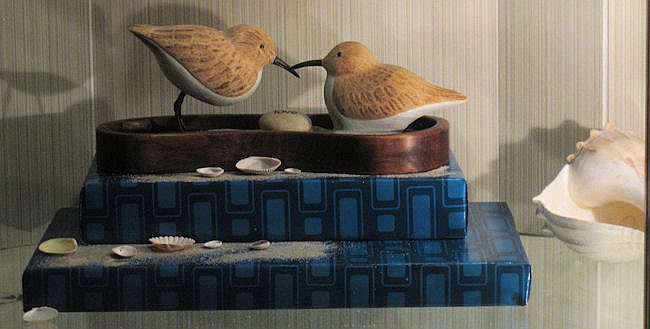
.Note the typical use of detailing with a burning tool to create the feathers on this decorative Sandpiper display that Alex made for his daughter. The female of the pair is nesting on the sand and the word "Love" is etched on the rock.
..............................................................Sandpipers
Lower
Row
Right Column
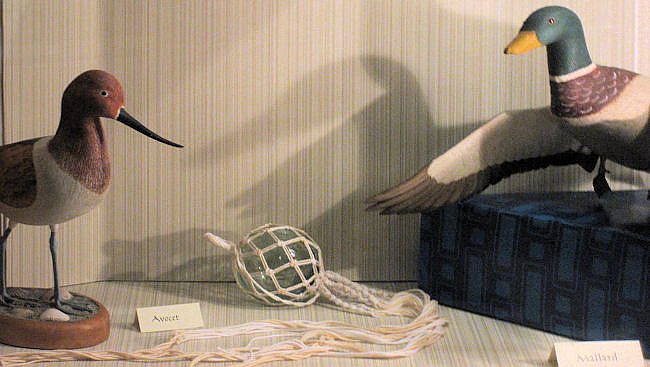
The Cornell Ornithology Lab page for the Mallard has three videos. Ducklings forraging" is so cute. Juveniles with the mother swimming around and ducking for food. Hmm, is that why one meaning of "duck" is to lower one's head?
.......Avocet..................................................................Mallard
(half size)
The half-size Mallard was a gift from Alex to his son. Suspended from
the
ceiling with a fine line, it appears to be in flight.